AI Citations Are Converting Better Than SEO Traffic (Here’s Why It Matters)
Author:
Kevin C. Roy
· GreenBanana SEO ·
Published:
AI traffic from ChatGPT, Gemini, Perplexity, and Google AI Overviews is converting better than traditional organic traffic because the user journey starts later and with more trust. These users are usually not browsing. They are validating. That changes what matters: the new win is not just ranking, but becoming the source AI cites and
measuring how that visibility
turns into revenue.
5 Changes Marketers Need to Make Right Now
- Change 1: Stop treating AI citations like awareness only. They are now a revenue signal.
- Change 2: Stop optimizing only for browse behavior. AI traffic comes in with validation intent.
- Change 3: Stop relying on rankings as the main KPI. Start tracking citation share.
- Change 4: Stop publishing generic pages. Use answer-first, proof-backed, structured content.
- Change 5: Stop blending AI traffic into broad organic reporting. Build attribution and compare platforms separately.
Watch the Video
The Shift: AI Visibility Is Becoming Revenue
AI citations are no longer just influencing visibility. They are driving real revenue. That is the shift: if you appear in the answer layer and the user trusts the answer before the click, the visit behaves differently.

Why AI Traffic Converts Better
Traditional SEO traffic often starts early in the decision process. The user searches, scans, compares, clicks around, and may convert later. AI traffic is different. The user asks, gets an answer, trusts the source, clicks, and is much closer to action.
- Traditional SEO: Search → scan → click → compare → maybe convert
- AI search: Ask → get answer → trust source → click → convert
The difference: AI users are not browsing. They are validating.
The Tracking Gap
Nearly 90% of brands show up in AI citations, but almost none track it. That means most companies do not know where they are being cited, what is driving conversions, or how to scale the channel. This is where the opportunity is.
5 Shifts Turning AI Visibility Into Conversion Revenue
| Change | What Changed | Why It Matters | What To Do Now |
|---|---|---|---|
| AI visibility now affects revenue | AI citations are no longer just a visibility play. | A cited source can now drive high-intent visits and conversions. | Track AI citations as a business metric, not just a branding signal. |
| User intent is stronger | Traditional search users browse. AI users validate. | Validation-stage clicks usually convert better than early-stage research clicks. | Build pages for decision support, not just traffic capture. |
| The KPI has changed | Rankings and clicks are no longer enough. | The real question is whether AI platforms choose your page as the source. | Measure citation share for priority prompts and competitors. |
| Content structure matters more | Answer blocks, proof, tables, and FAQs are easier for AI to extract. | Clean structure increases citation probability. | Rewrite key pages into answer-first, proof-backed, extractable formats. |
| Attribution must get more precise | Most brands do not isolate AI-driven traffic or compare platforms. | You cannot scale what you do not measure. | Track AI referrals, tag traffic sources, and review assisted conversions by platform. |
What Actually Drives AI Citations
- High-intent queries: branded searches, research queries, comparison searches
- Answer-first content: direct answers, proof, clear explanations
- Structured content: tables, clean sections, clean formatting
- Owned content: pages you control and can structure clearly

What Does Not Work Well
- Generic blog content
- Unstructured pages
- Walls of text with no direct answer
- Pages that make AI figure everything out
How To Win
- Structure for retrieval: use answer blocks, proof sections, and FAQs.
- Build attribution: track AI referrals, tag traffic sources, and monitor assisted conversions.
- Measure across platforms: compare ChatGPT, Gemini, Perplexity, and AI Overviews separately.
AI Citation Readiness Checklist
- Use a direct answer block near the top of the page.
- Add proof that supports the answer with clear explanations.
- Break content into short sections with useful headings.
- Use at least one table for side-by-side comparison.
- Include an FAQ section with simple, extractable answers.
- Target branded, research, and comparison queries.
- Track AI referrals separately from broad organic traffic.
- Review assisted conversions tied to AI-originated sessions.
- Measure citation share across priority prompts.
- Compare ChatGPT, Gemini, Perplexity, and AI Overviews independently.
Key Quotes
AI traffic is converting better than your best SEO traffic… and almost nobody is tracking it.
AI citations are no longer just influencing visibility…
They’re driving real revenue.
They’re not browsing…
They’re validating.
What To Do Next to Turn AI Visibility Into Revenue
If your team is still measuring only rankings, clicks, and sessions, you are looking at the wrong layer of search. Start by restructuring your most important pages for extraction, then build attribution around AI-originated traffic, and then compare citation performance across platforms. That is how you move from AI visibility to conversion data.
Talk to GreenBanana SEO about AI citation strategy and measurement
Frequently Asked Questions
What is AI citations conversion?
AI citations conversion is the idea that visibility in AI answers can lead directly to leads and sales, not just awareness. The win is not only getting mentioned. The win is getting clicked after the answer has already built trust.
Why does AI traffic convert better than traditional SEO traffic?
AI users usually arrive after they have already asked a direct question and seen an answer. That means the click is often a validation step, not an early research step. Higher intent usually means a shorter path to conversion.
What is citation share?
Citation share measures how often your brand or page is the source AI platforms use for important queries. It is different from rankings, clicks, or sessions. It answers one core question: did the AI choose you?
What types of queries drive AI citations?
The strongest citation triggers in this video are branded searches, research queries, and comparison searches. These are closer to decision-making than broad informational searches. That is why they matter so much for revenue.
What content format increases citation probability?
Answer-first content with proof and clean structure is easier for AI systems to extract. Direct answers, tables, short sections, and FAQs make the page easier to pull from. Generic walls of text make citation less likely.
How do I track AI citations?
Start with a prompt library built around your most important branded, commercial, and research queries. Test those prompts across ChatGPT, Gemini, Perplexity, and Google AI Overviews, then log which brands and URLs get cited. The goal is to see how often you appear, for which prompts, and against which competitors.
What tools show AI traffic?
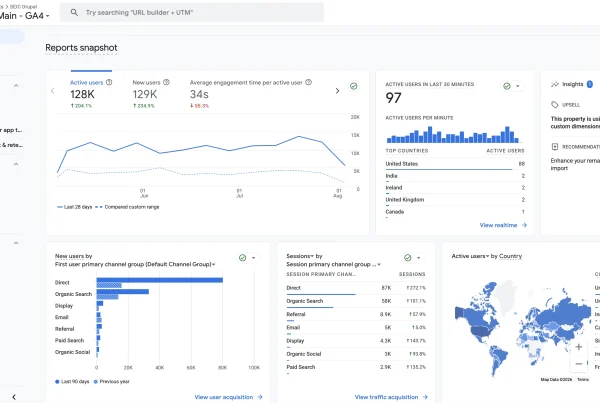
AI traffic is usually found through analytics platforms, referral source analysis, and AI-specific reporting where available. Google Analytics, server logs, and custom attribution setups can help isolate visits from AI-driven sources. Platform-specific reporting can add more visibility when it exists.
How do I attribute conversions from AI traffic?
Attribution usually requires custom tracking because standard analytics does not separate AI-assisted journeys cleanly. Use referral analysis, landing-page patterns, assisted conversion tracking, CRM data, and prompt-level testing together. That gives you a better path from citation to visit to lead to revenue.
Do I need to measure each AI platform separately?
Yes, because each platform behaves differently and does not cite the same way every time. ChatGPT, Gemini, Perplexity, and AI Overviews can surface different sources for similar prompts. Separate measurement helps you see where your visibility is strongest and where gaps exist.
What does not work well for AI citation visibility?
Generic blog content and unstructured pages are weak inputs for citation. If the page makes AI figure everything out, your odds go down. Clean formatting, direct answers, and proof are better.