Query Fan Out: How to Build Content AI Search Can Actually Use
Author: Kevin C. Roy · GreenBanana SEO · Published: 2026-06-16
Query fan out is the process AI search systems use to turn one user question into multiple related searches. Instead of only matching the exact phrase someone typed, AI may explore definitions, comparisons, pricing, reviews, risks, examples, and next-step questions before creating one answer. For SEO, this means content must cover the full intent landscape, not just one keyword.
What Changed?
Traditional SEO was mostly built around visible queries.
A user typed a phrase.
Google returned pages.
SEOs optimized pages to match that phrase.
That still matters.
But AI search adds another layer.
AI systems can take one prompt, break it into subtopics, search across different angles, and synthesize one response. Google has publicly described this as query fan out: breaking a question into subtopics and issuing multiple related searches.
The practical shift is simple:
You are no longer only competing for the visible query.
You are competing for the hidden subqueries, intent branches, and sources the AI system may use to build the answer.
What Is Query Fan Out?
Query fan out is the process of expanding one user prompt into multiple related searches.
The simple version looks like this:
- A user asks one question.
- The AI system identifies the real intent.
- The system creates related subqueries.
- It retrieves information from multiple sources.
- It selects the most useful information.
- It creates one synthesized answer.
Example:
A user asks:
“What is the best CRM for a small business?”
A traditional search engine may look for pages that match that phrase.
An AI search system may explore:
- best CRM for small business;
- CRM pricing comparison;
- CRM reviews;
- CRM for sales teams;
- CRM for service companies;
- CRM integrations;
- CRM setup time;
- CRM alternatives;
- CRM for companies under 50 employees.
That is the difference.
Old search was more direct.
AI search is more investigative.

Query Fan Out vs. Traditional Search
| Traditional Search | Query Fan Out |
|---|---|
| Starts with one typed query | Starts with one prompt, then expands it |
| Looks for matching pages | Looks for useful information across several angles |
| Rewards direct keyword relevance | Rewards broader intent coverage |
| Returns a ranked list | Produces a synthesized answer |
| SEO target is the keyword | SEO target is the full intent landscape |
| Measurement focuses on rankings | Measurement also includes AI mentions and citations |
The mistake is thinking query fan out is just long-tail keyword research with a new name.
It is not.
Fan-out queries may be generated by the AI system. They may not show traditional search volume. They may change depending on the model, the user, the prompt, and the context.
So the goal is not to chase every possible phrase.
The goal is to understand the patterns behind the question.
Why Query Fan Out Matters for SEO and AI Visibility
Ranking for one query is not enough anymore.
That does not mean rankings are dead.
It means rankings are only part of the picture.
AI search may evaluate multiple related angles before generating an answer. If your content only matches the exact keyword, it may miss the larger intent tree.
That affects two important outcomes:
- whether your brand is mentioned in an AI answer;
- whether your content is cited as a source.
Those are not always the same thing.
An AI mention happens when the answer references your brand.
An AI citation happens when the answer links to or cites your content.
The ideal situation is being understood, mentioned, and cited in the right context.
The old SEO question was:
“Can we rank for this keyword?”
The new AI search question is:
“Can we be useful across the related questions AI may ask before it builds the answer?”
The Main Types of Fan-Out Queries
Not all fan-out queries work the same way.
Some expand the topic.
Some compare options.
Some check trust.
Some anticipate what the user needs next.
| Fan-Out Type | What It Means | Example |
|---|---|---|
| Related topic queries | Adds surrounding context | AI SEO may connect to AEO, GEO, schema, knowledge graphs, and AI citations |
| Implicit question queries | Covers what the user did not ask directly but likely needs | Heat pump search expands into rebates, cost, installation, and utility savings |
| Comparative queries | Compares products, services, brands, or options | Company A vs. Company B, best tools, pros and cons |
| Recency queries | Looks for current information | New regulations, updated pricing, recent product changes |
| Reformulation queries | Searches different versions of the same intent | “Rank in AI search,” “get cited by AI,” “show up in AI Overviews” |
| Contextual queries | Changes based on user context | Location, business size, industry, budget, use case |
| Next-step queries | Anticipates what the user needs after the first answer | Tools, cost, setup, mistakes, templates, vendors |
This is why thin content struggles.
A thin page may answer the first question.
It usually does not answer the decision behind the question.
What Actually Works Now: The Query Fan Out Framework
Step 1: Start With Core Business Topics
Do not start with every keyword you can find.

Start with topics tied to the business.
Good topics connect to:
- services;
- products;
- buyer questions;
- sales objections;
- competitive positioning;
- revenue opportunities;
- real expertise.
For GreenBanana SEO, that may include:
- AI SEO;
- Answer Engine Optimization;
- Generative Engine Optimization;
- AI visibility tracking;
- structured data;
- content architecture;
- technical SEO.
For a local service company, it may include:
- HVAC replacement;
- heat pumps;
- roofing;
- water damage repair;
- legal services;
- dental implants;
- addiction treatment.
The topic has to matter commercially.
Otherwise, you are building content for attention, not business.
Step 2: Map the Fan-Out Branches
Next, map what the AI system may need to understand.
Ask:
- What does the user need to know first?
- What comparisons will they make?
- What objections will come up?
- What risks are they worried about?
- What proof do they need?
- What information needs to be current?
- What steps happen next?
- What outside sources might they trust?
- What would AI need to build a strong answer?
This is not just keyword research.
This is intent mapping.
Step 3: Build Topic Clusters
A single page cannot always cover every branch well.
That is where topic clusters help.

A strong topic cluster may include:
- one main pillar page;
- supporting subtopic pages;
- FAQs;
- comparison pages;
- how-to content;
- glossary-style explainers;
- use case pages;
- proof or case study content.
The pillar page gives the broad answer.
The supporting pages go deeper into the branches.
That makes the site more useful for both traditional SEO and AI search.
Step 4: Cover Explicit and Implicit Intent
The explicit question is what the user typed.
The implicit question is what the user probably needs next.
Example:
If someone searches “query fan out,” they may also need to know:
- how query fan out works;
- why it matters for SEO;
- whether Google AI Mode uses it;
- how to optimize content for it;
- what fan-out queries are;
- how to measure AI visibility;
- what content structure works best.
A strong page covers both the obvious question and the next logical questions.
Step 5: Make Content Extractable
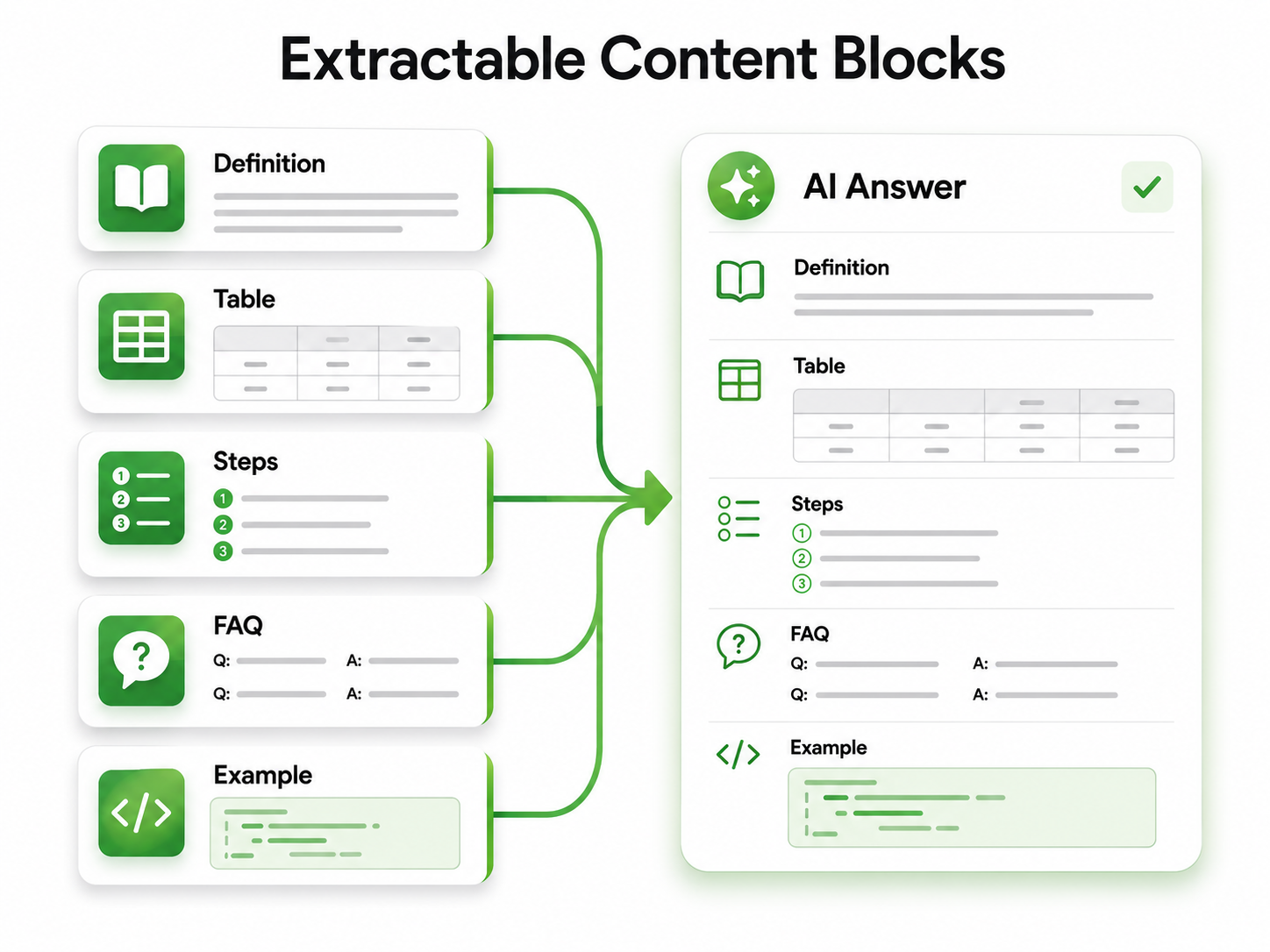
This is one of the biggest practical changes.
AI systems need content they can retrieve, understand, summarize, compare, and cite.
Use:
- clear headings;
- direct definitions;
- short paragraphs;
- tables;
- bullets;
- step-by-step sections;
- examples;
- clean page structure;
- specific answers.
The best content for AI search is not just long.
It is clear, modular, and easy to extract.
A strong answer buried in a vague paragraph may lose to a clearer section with a direct heading and a simple explanation.
Step 6: Strengthen Off-Site Signals
Some fan-out branches are trust checks.
AI may look beyond your website for validation.
That can include:
- review sites;
- directories;
- comparison pages;
- industry publications;
- social platforms;
- community discussions;
- podcasts;
- interviews;
- partner pages.
You cannot solve every trust question on your own website.
AI systems often look for corroboration.
That means off-site visibility matters.
Step 7: Measure AI Visibility
Traditional SEO measurement is still important.
Keep tracking:
- rankings;
- organic traffic;
- leads;
- conversions;
- revenue;
- technical performance.
But query fan out adds another layer.
You also need to track:
- AI mentions;
- AI citations;
- topic-level visibility;
- brand sentiment in AI answers;
- competitor mentions;
- cited sources;
- gaps in topic coverage;
- pages being pulled into AI answers.
The goal is not just to know where you rank.
The goal is to know where your brand is being used inside AI-generated answers.
Common Query Fan Out Mistakes
| Mistake | Why It Hurts |
|---|---|
| Optimizing only for exact keywords | Misses the related questions AI may explore |
| Creating thin topic coverage | Fails when AI expands into comparisons, risks, and next steps |
| Burying the best answer | Makes the content harder to retrieve and cite |
| Ignoring trust signals | Weakens selection when AI needs credible sources |
| Measuring only rankings | Misses AI mentions, citations, and source influence |
| Chasing every subquery | Creates bloated, unfocused content |
| Writing without structure | Makes good information harder to extract |
How Query Fan Out Supports AEO, GEO, and AI SEO
Query fan out sits underneath modern AI search strategy.
AEO: Answer Engine Optimization
AEO means making content clear, direct, and answer-ready.
Query fan out rewards content that answers the main question and the related questions around it.
That is why AEO content needs:
- definitions;
- FAQs;
- structured sections;
- direct answers;
- proof points;
- clean formatting.
GEO: Generative Engine Optimization
GEO focuses on visibility inside AI-generated answers.
Query fan out matters because the AI system may not use your page for the original phrase.
It may use a section of your page because that section answers one subquery better than anything else.
AI SEO
AI SEO connects traditional SEO, technical SEO, content strategy, structured data, authority, and AI visibility.
Query fan out is part of that bigger shift.
The brands that win will not just have pages.
They will have answer-ready content systems.
Key Takeaway
Query fan out means AI search can turn one user question into many related searches before producing one answer.
That changes SEO.
The goal is not to stuff pages with every possible keyword variation.
The goal is to build clear, structured, trustworthy content that covers the right intent branches.
The better question is not only:
“Can we rank for this keyword?”
The better question is:
“If AI had to build the best answer around this topic, would our content help across multiple branches of that answer?”
If not, your content may be too narrow for how AI search now works.
Frequently Asked Questions About AEO
What is query fan out?
Query fan out is the process AI search systems use to turn one user query into multiple related subqueries so they can gather broader context and build a stronger answer.
Is query fan out used by Google AI Mode?
Yes. Google has said AI Mode uses query fan out to break questions into subtopics and issue multiple related searches. Google Search Central also says AI Overviews and AI Mode may use query fan out.
How is query fan out different from keyword research?
Keyword research looks for phrases people search. Query fan out looks at the related questions and subtopics an AI system may generate behind the scenes to answer a broader prompt.
How do you optimize for query fan out?
Start with a core business topic, map related intent branches, build topic clusters, cover explicit and implicit questions, structure content clearly, strengthen trust signals, and measure AI mentions and citations.
What is the biggest mistake companies make?
The biggest mistake is writing only for the exact keyword. AI search may evaluate definitions, comparisons, risks, reviews, examples, and next steps before generating an answer.
Ready to talk AEO?
Contact GreenBanana SEO to discuss your AI search content needs.