ChatGPT Ads Are Here: What Advertisers Can Do Today, What Is Still Limited, and How to Test the Platform Correctly
Author:
Kevin C. Roy
·
Published:
ChatGPT Ads are an early advertising surface built around conversational intent.
They are not the same as Google Ads or Meta Ads. Advertisers can use them to test
visibility inside research, comparison, and decision-making conversations, but they
should start with controlled budgets, dedicated landing pages, clean tracking, and
realistic expectations.
What Changed?
ChatGPT Ads introduce a different kind of paid media environment.
Google Ads are built around search behavior. A user types a query, and advertisers bid against that declared intent.
Meta Ads are built around audiences, creative, behavior, and algorithmic delivery. A user scrolls, and the platform tries to match the right creative to the right person.
ChatGPT Ads sit in a different moment.
The user may be asking a question, researching options, comparing providers, troubleshooting a problem, or trying to make a decision.
That makes the ad environment more conversational.
The practical difference is simple:
Advertisers are not just trying to buy a keyword.
They are trying to align with a user’s problem.
That is a major shift for media buyers, business owners, and agencies.
Why It Matters

Advertisers are used to mature platforms.
Google Ads gives advertisers deep controls: keywords, match types, negative keywords, search term reports, auction insights, device segmentation, location segmentation, bid strategies, experiments, and advanced reporting.
Meta gives advertisers another deep toolbox: custom audiences, lookalikes, retargeting, pixel events, creative testing, attribution settings, campaign learning, catalog ads, and value optimization.
ChatGPT Ads Manager Beta is earlier.
That does not make it useless.
It means advertisers should not expect the same level of control yet.
The right expectation is:
ChatGPT Ads are useful enough to test, but not mature enough to treat like a fully proven performance channel.
The opportunity is the environment.
People use ChatGPT to explore, compare, ask, plan, and decide.
That is valuable behavior.
But the controls and reporting are still developing.
Breakdown
Google Ads vs Meta Ads vs ChatGPT Ads
| Category | Google Ads | Meta Ads | ChatGPT Ads |
|---|---|---|---|
| Core user behavior | Searching | Scrolling / engaging | Asking / comparing / deciding |
| Main intent signal | Keyword or query | Audience behavior + creative engagement | Conversational context |
| Buying mindset | Capture declared demand | Influence or create demand | Align with decision-support moments |
| Common structure | Campaign → ad group → keywords / ads | Campaign → ad set → ad | Campaign → ad group → ad |
| Main early lever | Keywords, bids, landing pages | Creative, audiences, pixel data | Context hints, ad clarity, landing page fit |
| Reporting maturity | Very mature | Very mature | Early-stage core metrics |
| Best early use | High-intent search capture | Demand creation and retargeting | Research, comparison, education, decision support |
| Common mistake | Going too broad without controls | Weak creative or poor tracking | Treating context hints like exact-match keywords |
What Advertisers Can Expect Today
| Area | What Exists Today | What Advertisers Should Not Expect Yet |
|---|---|---|
| Campaign structure | Campaign, ad group, ad | Google Ads-level complexity |
| Targeting mindset | Context hints and themes | Exact prompt targeting |
| Reporting | Impressions, clicks, spend, CTR, CPC, CPM, conversions when configured | Deep search-term-style diagnostics |
| Conversion measurement | Conversion tracking can be configured | Fully mature conversion optimization in every account |
| Audiences | Customer/prospect list workflows may be available | Meta-level lookalike and retargeting maturity |
| Location targeting | Country-level controls are visible in early workflows | ZIP, radius, DMA, or city-level control unless visible in the account |
| Optimization | Budget, bid, ad copy, context themes, landing page, tracking | Mature automated bidding like target CPA or target ROAS in every setup |
| Privacy | Aggregate advertiser reporting | Raw user chats, prompts, memories, or personal details |
The Biggest Difference: Context Hints Are Not Keywords

This is the part advertisers need to understand first.
In Google Ads, you might build around keywords like:
- AI SEO agency
- SEO agency Boston
- ChatGPT SEO
- AEO agency
- Google Ads management company
That is normal for search.
But ChatGPT Ads require a different mindset.
The better question is:
What is the user trying to solve?
A weak context hint looks like this:
“AI SEO, AEO, GEO, ChatGPT SEO, AI search.”
A stronger context hint looks like this:
“Business owners comparing ways to get their company mentioned, cited, or recommended in ChatGPT, Gemini, Perplexity, and Google AI answers.”
That second version describes a real conversation.
It tells the platform more about the user’s problem.
That is closer to how this environment works.
What Actually Works Now?
For advertisers, the strongest early approach is not to copy a Google Ads keyword strategy directly into ChatGPT Ads. The better approach is to build around the conversations, questions, and decision moments that make the offer relevant.
The 5-Part ChatGPT Ads Test Framework
1. Start With the Buyer Conversation
Do not start with a giant keyword list.
Start with the customer’s actual questions.
Examples:
- Why is my company not showing up in ChatGPT?
- How do I get my brand mentioned in AI answers?
- Is SEO still worth it with AI Overviews?
- How should I compare AI search agencies?
- What is the difference between SEO, AEO, and GEO?
Those are not just keywords.
They are decision-stage conversations.
That is where ChatGPT Ads may become interesting.
2. Build One Ad Group Per Intent Theme
Keep ad groups focused.
Do not mix too many products, services, audiences, or buying stages together.
Better ad group themes might include:
| Ad Group Theme | Example Intent |
|---|---|
| AI visibility audit | Companies trying to see where they appear or do not appear in AI-generated answers |
| AI SEO agency | Business owners comparing agencies that work on ChatGPT, Gemini, Perplexity, and Google AI visibility |
| SEO is changing | Marketing leaders trying to understand whether traditional SEO still works |
| Local AI visibility | Local or regional businesses trying to get recommended in AI search experiences |
| AEO / GEO education | Users trying to understand answer engine optimization and generative engine optimization |
The cleaner the theme, the cleaner the test.
3. Write Ads That Are Useful, Not Cute
This is not Meta.
The ad does not need to stop a scroll.
It needs to fit the problem.
Good ChatGPT Ads should be:
- Clear
- Specific
- Useful
- Benefit-focused
- Honest
- Matched to the landing page
Weak ad:
“Dominate AI Search Today.”
Better ad:
“See How Your Brand Appears in ChatGPT and AI Search.”
The second one tells the user what they actually get.
4. Build a Dedicated Landing Page
This is where most advertisers will cut corners.
Do not send the traffic to a homepage.
A strong ChatGPT Ads landing page should include:
- A clear answer block at the top
- A plain-English explanation of the offer
- Proof points
- Testimonials or examples
- FAQs
- Schema where appropriate
- A clean CTA
- Fast page load
- Clean tracking
- No crawler-blocking issues
The landing page should answer three questions quickly:
- What is this?
- Why should I trust it?
- What should I do next?
That structure helps humans.
It also supports AEO and AI readability.
5. Measure Beyond the Click
Clicks are only the first signal.
A responsible test should measure three layers.
| Layer | What to Measure | Why It Matters |
|---|---|---|
| Platform delivery | Impressions, clicks, spend, CTR, CPC, CPM | Confirms the campaign can serve and attract attention |
| Traffic quality | Engaged sessions, scroll depth, time on page, form starts, phone clicks | Shows whether the traffic is real and relevant |
| Business quality | Forms, calls, booked meetings, qualified leads, pipeline, revenue | Shows whether the channel creates business value |
A campaign can have a reasonable CPC and still be worthless.
A campaign can have a higher CPC and still be valuable if the leads are better.
That is why advertisers should not judge ChatGPT Ads by clicks alone.
What Advertisers Should Expect
Expect Simplicity
The platform is easier to understand than Google Ads or Meta because there are fewer controls.
That is good for setup.
It is not always good for optimization.
Fewer levers means advertisers need better discipline.
Expect Lighter Reporting
Advertisers should expect core metrics.
They should not expect Google-style search term reports or Meta-style audience breakdowns yet.
That means external tracking matters more.
Use:
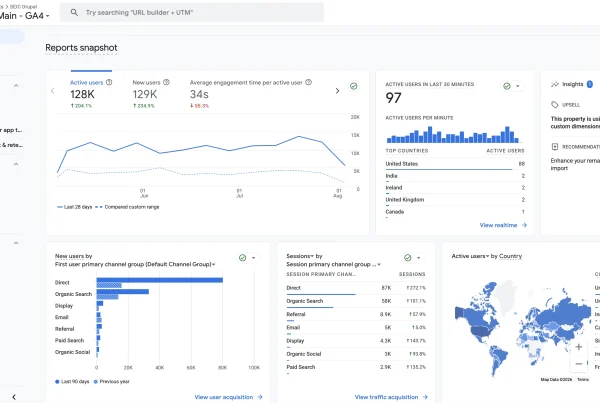
- Static UTMs
- GA4
- CRM source tracking
- Call tracking
- Conversion events
- Campaign naming discipline
- Lead-quality feedback from sales
Expect Privacy Boundaries
Advertisers should not expect to see the exact user conversation.
That is important.
The platform is designed so advertisers receive aggregate performance data, not raw chats or personal details.
That means advertisers need to optimize from patterns, not individual prompts.
Expect the Platform to Change
This is beta.
Features may change.
Controls may expand.
Reporting may improve.
That is exactly why advertisers should test carefully and avoid making hard claims too early.
What To Do Next
Here is the practical test plan.
Before Launch
| Item | Why It Matters |
|---|---|
| Dedicated landing page | Keeps the offer and context clean |
| Static UTMs | Helps analytics and CRM identify the traffic |
| Pixel / conversion setup | Measures meaningful actions |
| CRM source tracking | Shows lead quality |
| Call tracking | Captures phone leads |
| Multiple ad variations | Tests message fit |
| Focused ad groups | Keeps intent themes clean |
| Clear budget cap | Prevents over-testing too early |
First 30 Days
Watch for:
- Can the campaign serve?
- Is the CPC within a testable range?
- Are users engaging with the page?
- Are form starts or phone clicks happening?
- Are conversion events firing correctly?
- Is the CRM capturing source properly?
Do not overreact to one day of data.
The first phase is plumbing and signal validation.
Days 31–60
Start improving:
- Shift spend toward stronger ad groups
- Add more ad variations
- Remove weak messages
- Tighten landing page copy
- Compare traffic quality by theme
- Review lead quality with sales
Days 61–90
Make a decision:
- Scale
- Hold
- Rebuild
- Pause
The decision should be based on qualified traffic, lead quality, pipeline, and business value — not just clicks.
Key Takeaway
ChatGPT Ads are not a blind budget shift.
They are a controlled learning opportunity.
The platform is early, but the environment is important.
Advertisers should learn how to buy against conversational intent now, while expectations are still realistic and competition is still forming.
The winning formula is not complicated:
Clear conversation theme.
Useful ad.
Dedicated landing page.
Clean tracking.
CRM validation.
Measured budget.
Real business outcome.
That is how to test ChatGPT Ads without wasting money.
Frequently Asked Questions About ChatGPT Ads
How should advertisers write context hints for ChatGPT Ads?
Advertisers should write context hints around the user’s problem, not just a keyword list. A stronger context hint describes the conversation, question, need, or situation where the ad may be relevant.
What should a ChatGPT Ads landing page include?
A strong ChatGPT Ads landing page should include a clear answer block, a plain-English explanation of the offer, proof points, testimonials or examples, FAQs, schema where appropriate, a clean CTA, fast page load, clean tracking, and no crawler-blocking issues.
How should ChatGPT Ads be measured against Google Ads and Meta Ads?
ChatGPT Ads should be measured beyond the click. Advertisers should review platform delivery, traffic quality, and business quality, including impressions, clicks, spend, CTR, CPC, CPM, engaged sessions, form starts, phone clicks, qualified leads, pipeline, and revenue.
What businesses are the best fit for early ChatGPT Ads testing?
Businesses where customers research, compare, ask questions, or need education before deciding are the best fit for early ChatGPT Ads testing. The environment is strongest when the campaign can align with research, comparison, education, and decision-support moments.
What tracking should be in place before launching a ChatGPT Ads campaign?
Before launching a ChatGPT Ads campaign, advertisers should have static UTMs, pixel or conversion setup, GA4, CRM source tracking, call tracking, campaign naming discipline, and lead-quality feedback from sales.
Watch the Breakdown
Ready to talk AEO?
Connect with GreenBanana SEO to discuss your AEO questions.