3 AI Visibility Experiments That Reveal How ChatGPT, Gemini & Google Actually Choose Sources
5 Changes to Make Now
- Create a narrative control page that clearly defines your brand, what you do, and what you want AI to repeat.
- Rewrite core pages so answers are fast to extract, easy to trust, and hard to misread.
- Add proof blocks with tables, specifics, and factual language instead of generic filler.
- Publish small, tightly scoped micro studies instead of relying on broad, catch-all pages.
- Seed references across channels and communities so your main message gets reinforced.
Watch the Video
The Shift Nobody Is Talking About
AI engines are not ranking your website the way traditional search did. They are selecting what looks like the best source of truth. That source might be your page, a review, a forum thread, or a third-party mention. If your strongest signal is weak, outdated, or negative, AI can keep repeating it.
Ranking Pages vs. Influencing AI Answers
| Old SEO Mindset | AI Citation Mindset |
|---|---|
| Rank a page for a keyword | Become the source AI trusts and repeats |
| Optimize for clicks from blue links | Optimize for extraction inside AI answers |
| Publish broad topic pages | Publish specific, provable, structured assets |
| Focus mainly on page-level rankings | Focus on narrative control across multiple signals |
| Measure visits first | Measure citations, mentions, and answer inclusion |
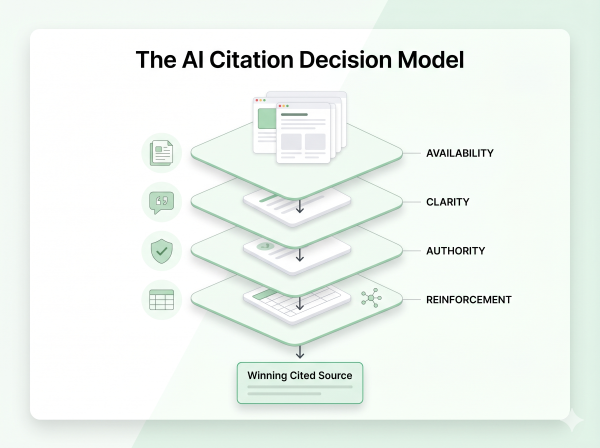
The four filters behind AI citation decisions are availability, clarity, authority, and reinforcement.
What the 3 AI Visibility Experiments Show
Experiment 1: The Single Negative Signal Problem
One clear negative review kept showing up as a top cited source in AI answers for a brand. It kept winning because it was visible, specific, and third-party. The lesson is simple: if you do not control your narrative, AI will pick one for you.
Experiment 2: From Zero to 1,631 Citations
A healthcare site moved from zero citations to more than 1,600 mentions by changing how content was written and distributed. The big shifts were better AI readability, clearer proof, added structure, and distribution into places that created references. They did not build backlinks the old way. They built citation signals.
Experiment 3: Micro Studies Win
Across multiple agency tests, smaller and tighter research assets outperformed large generic pages. Clear scope improved extraction, unique data improved trust, and structured formatting improved reuse. Generic content lost. Specific, provable, structured content won.
The 5 Changes That Increase AI Citations
| Change | What Changed | Why It Matters | What To Do Now |
|---|---|---|---|
| Narrative Control Page | A clear page defines your brand, offer, and factual positioning. | AI needs one strong source to pull from before weaker signals fill the gap. | Build a clean page with direct statements, factual language, and consistent entity naming. |
| Extraction-Ready Writing | Content is rewritten to be easier for AI to parse and reuse. | Dense or vague pages are harder to quote and summarize correctly. | Use answer blocks, short definitions, plain language, and direct headings. |
| Proof Structure | Evidence, tables, and specifics replace generic filler. | AI prefers content that looks provable, structured, and trustworthy. | Add comparison tables, proof blocks, FAQs, and concrete supporting details. |
| Micro Studies | Small, tightly scoped content pieces replace broad generic pages. | Specificity improves extraction and makes the asset easier to cite. | Publish narrow studies, observations, or mini findings around one clear topic. |
| Signal Seeding | The same idea is distributed into communities, mentions, and references. | Reinforcement helps AI trust that a source is not standing alone. | Push structured content into channels that can create repeat references and supporting mentions. |
The Real Model: What AI Is Evaluating
| Factor | What AI Is Asking | Why It Wins or Loses |
|---|---|---|
| Availability | Are there sources about this topic or brand? | No source means nothing useful can be cited. |
| Clarity | Is this easy to extract? | Clear structure raises the chance of reuse. |
| Authority | Can I trust this? | Specific, factual, and third-party-supported content gets more weight. |
| Reinforcement | Do other sources support it? | Repeated signals reduce doubt and strengthen citation confidence. |
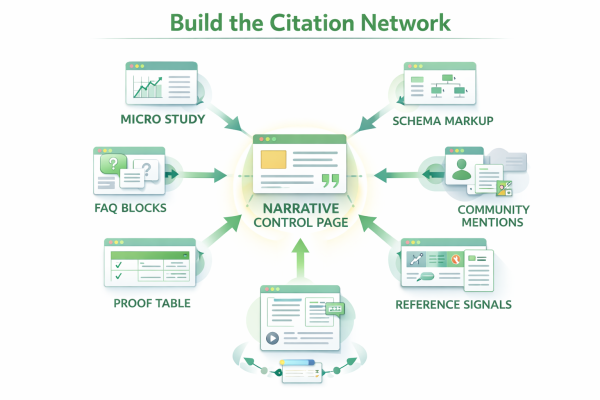
A strong narrative control page becomes more powerful when it is reinforced by structured assets and outside references.
AI Citation Readiness Checklist
- Have one page that clearly states who you are, what you do, and how you should be described.
- Use direct answer blocks near the top of key pages.
- Add tables, FAQs, and short definitional sections that are easy to extract.
- Remove vague filler and replace it with specifics.
- Keep brand naming, service naming, and entity references consistent.
- Publish at least one tightly scoped micro study or narrow insight page.
- Support your main claims with repeatable language across multiple assets.
- Distribute your strongest ideas into places that can generate mentions and references.
- Review whether a weak third-party signal is currently controlling your narrative.
- Track which pages and sources AI systems actually mention back to you.
Key Quotes
“AI isn’t ranking your website… it’s choosing your reputation.”
“One bad review… one page… or one piece of content… can completely control how AI talks about your brand.”
“If you don’t control your narrative… AI will pick one for you.”
“It’s about creating content that is easy to extract, trust, and reference.”
“Whoever wins those four… gets cited.”
What To Do Next to Take Control of What AI Says
Start with one narrative control page. Then add one micro study, one proof table, one FAQ block, and one distribution plan that reinforces the same message across multiple places. That is how you move from passive publishing to active citation control.
Talk to GreenBanana SEO about building a citation-ready AI visibility system.
Frequently Asked Questions About AI Visibility Experiments
How do I control what AI says about my brand?
You control it by giving AI stronger and clearer sources than whatever weak third-party signal is floating around now. That means publishing an authoritative brand page, tightening your About and author pages, adding structure, and reinforcing the same message across supporting assets and trusted mentions.
How do I increase AI citations quickly?
The fastest gains usually come from publishing tightly scoped content that is easy for AI systems to extract and trust. Start with a clear answer block, add a proof table or factual support, use clean structure, and avoid generic summary writing.
Why can one negative review dominate AI answers?
One negative review can dominate when it is one of the clearest and most trusted signals available about a brand. If your own pages are weak or vague, AI may keep reusing that third-party source because it looks more specific and more reliable.
What is a narrative control page?
A narrative control page is a structured page built to define your brand in clear factual language. It should explain who you are, what you do, what makes you different, and the exact wording you want AI systems to repeat back.
Why do micro studies beat big generic pages?
Micro studies often win because they are narrow, specific, and easier to reuse. A tightly scoped page with unique findings gives AI a cleaner source to extract than a broad page trying to cover everything at once.
What does AI look for before it cites a source?
AI is looking for availability, clarity, authority, and reinforcement. If a source exists, is easy to extract, looks trustworthy, and is supported elsewhere, it has a much better chance of being cited.
Does schema alone improve AI visibility?
No, schema alone is not enough. Schema helps organize meaning, but it works best when the visible page is already clear, specific, and structured in a way that AI can easily understand and reuse.
What should I publish first if I want better AI visibility?
Start with your narrative control page because it gives AI a central source to reference. After that, publish one micro study or highly specific insight page that adds proof and strengthens your citation network.
What tools track AI visibility?
There is no single perfect dashboard yet, so teams usually track AI visibility with prompt libraries, manual testing, citation logs, and search performance tools. The useful view is which brands, pages, and source types keep appearing in AI answers over time.