


Welcome to SCHEMA MOUNTAIN
Your Green Circle → Blue Square → Black Diamond Path to AI Visibility
A complete, ski-trail–inspired guide to the structured data you need—from essential Green Circle basics to advanced Black Diamond entity stacking.
Every Schema Type You Need to Win in AI Search….. with trail signs to make it easier
Schema is the trail map of AI search. Without it, your site is like a skier dropped at the top of a mountain with no signs, no markers, and no idea where the expert terrain starts. And let’s be honest—schema sounds overwhelming. So I decided to make it more fun by turning this entire guide into a ski-themed mountain. Whether you’re cruising the Green Circles of foundational schema, carving through the Blue Squares that build authority and rich results, or charging into the Black Diamond world of entity stacking and AI citations, this is your complete terrain map. Every schema type you need for AEO, GEO, and AI visibility—organized, explained, and ready to deploy. Strap in. We’re taking every run on the mountain.
Most SEO guides treat schema as a “nice-to-have.”
In AI search, it’s the map.
If you want to show up inside ChatGPT, Gemini, Perplexity, Claude, Copilot, and Google’s AI Overviews, you need structured data that makes your brand, content, and experts unmissable.
That’s what this Guidebook is for.
This is your all-in-one schema playbook—organized like a ski mountain:
 | Green Circle – Core schema every site needs |
 | Blue Square – Schemas that build topical authority & rich results |
 | Black Diamond – Advanced entity stacking & AI citation power moves |
Use it as a reference, a training manual for your team, or a checklist for your dev/SEO stack.

How This Guide Works
- Built for AEO + GEO
Everything here is selected because it helps answer engines and generative engines understand who you are, what you do, and why you’re the expert.
-
- Organized by “trail difficulty”.
Start with Green Circle if you’re missing basics. Move up to Blue Square when you want authority and rich snippets. Hit Black Diamond when you’re ready for entity stacking and AI citations.
- Practical, not theoretical
For each track, you’ll see which schema types to use, why they matter, and where they go: site-wide, blog posts, service pages, product pages, local pages, or video hubs
Appear in Answer Engine Results!!
* Required fields
🟢 Green Circle Runs
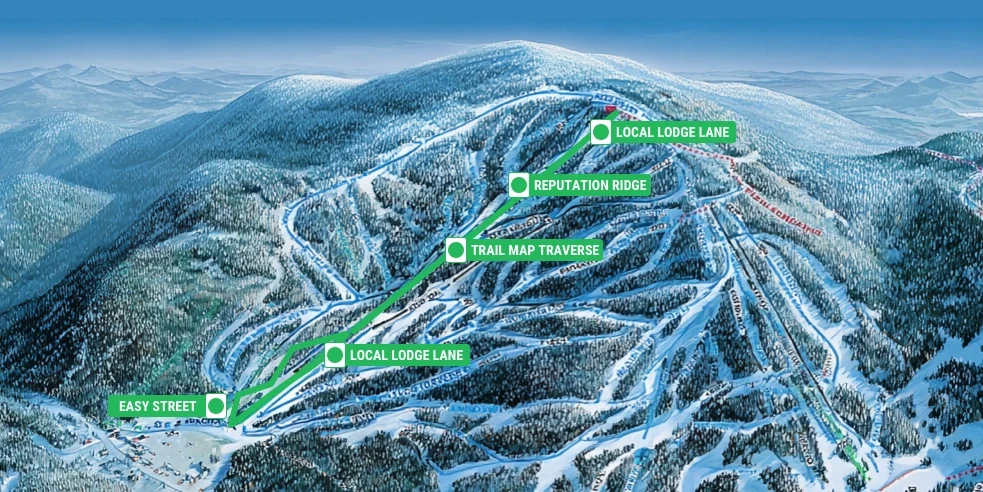
Core Schema Every Site Needs to Stay Upright in AI Search
If you do nothing else, implement your Green Circle schema. This is the minimum viable structure for AEO & GEO.
 Easy Street – Run 1: Site-Wide Identity
Goal: Tell AI engines exactly who you are and how to connect your brand, people, and content.
Key schema types:
- WebSite
- Organization
- Person (for primary author / founder)
- ContactPoint
- PostalAddress
- Brand
Where to use it:
- Your Global header or site-wide JSON-LD
- Example Pages : About page, Contact page, Author bio pages
Why it matters:
- Connects your brand, your people, and your topics in a way answer engines can trust
- Creates the foundation for author identity and entity stacking later on
Here is a Sample of Site Wide Identity Schema
 Content Crossing – Run 2: Page-Level Essentials
Goal: Make every page tell AI: “This is who I am and what kind of page I am.”
Key schema types:
- WebPage
- AboutPage
- ContactPage
- ProfilePage
- CollectionPage
Where to use it:
- On all core pages: home, about, contact, category hubs, team profiles
Why it matters:
- Clarifies page intent for AI rerankers
- Helps engines choose the right page to show or cite for a given question
Here are Samples of Page-Level Essentials Schemas ( I put them all on the same page, so you dont have to click every link)
Trail Map Traverse — Run 3: Navigation & Structure
Goal: Give AI a clear picture of your site’s architecture.
Key schema types:
- BreadcrumbList
- ItemList
- SiteNavigationElement
Where to use it:
- Category pages, product/listing pages, blog archives, mega-menus
Why it matters:
- Reinforces topic clusters and internal linking
- Helps AI see which content belongs together
Here are sample Schemas ( all on the same page too )
Reputation Ridge – Run 4: Reviews & Social Proof
Goal: Encode trust signals directly into your structured data.
Key schema types:
- Review
- Rating
- AggregateRating
Where to use it:
- Product pages
- Service pages
- Location / local business pages
- Testimonial or case study pages
Why it matters:
- Powers star ratings and rich snippets
- Strengthens “this brand is trusted for X” in answer engines
Sample Review & Social Proof Schema
Local Lodge Lane – Run 5: Local Business Basics
Goal: Help AI and map systems understand where you are and who you serve.
Key schema types:
- LocalBusiness + Place
- GeoCoordinates
- OpeningHoursSpecification
Where to use it:
- Any brand with a physical presence or defined service area
- Location pages and Google Business Profile landing pages
Why it matters:
- Improves visibility in local packs and AI summaries that mention local providers
- Connects physical presence with online authority
Here is the Sample Schema
Key schema types:
🟦 Blue Square Runs

Schemas That Build Authority, Rich Snippets & Topic Depth
Once your Green Circle runs are in place, you move up to Blue Square: this is where thought leadership and commercial intent pages start to perform.
Thought Leader Loop – Run 6: Articles, Blogs & Thought Leadership
Goal: Turn your content into AI-ready, citation-friendly assets.
Key schema types:
- Article
- BlogPosting
- NewsArticle
- TechArticle
Where to use it:
- Blog posts, guides, industry analysis, news updates
- Any page you want AI engines to quote or summarize
Why it matters:
- Signals expertise and topical relevance
- Gives AI engines structured hooks for “According to…” type citations
Here is a link to each schema
 Knowledge Knoll – Run 7: FAQ & Q&A Schema
Goal: Package your best answers into machine-readable Q&A blocks.
Key schema types:
- FAQPage
- QAPage
Where to use it:
- FAQ sections on service pages, product pages, resource hubs
- Standalone FAQ pages
- Support / help center content
Here is a link to the FAQ and Q&A Schema
Why it matters:
- Produces FAQ rich results in traditional search
- Gives AI engines clean, trustworthy question–answer pairs
 Merchandise Meadow – Run 8: Product & Service Schema
Goal: Make your offers unambiguous—for humans and AI.
Key schema types:
- Product
- Service
- Offer
- PriceSpecification
Where to use it:
- E-commerce product pages
- B2B service pages
- Pricing, packaging, and plans pages
Why it matters:
- Clarifies what you sell, to whom, and for how much
- Helps AI recommend your product or service when users ask “What’s the best X for Y?”
Here are sample product and service schemas with a BONUS comedienne schema
 Render Run – Run 9: Media Schema (Video, Audio, Images)
Goal: Turn your videos and media into AI-discoverable content.
Key schema types:
- VideoObject
- ImageObject
- AudioObject
- PodcastSeries / PodcastEpisode
Where to use it:
- YouTube video pages and transcript pages
- Podcast episode pages
- Hero images and infographic pages
Why it matters:
- Supports video carousels and media-rich snippets
- Makes AI engines more likely to pull from your video or podcast when answering
Her are links to these types of schema
 Run 10: Local Business Vertical Types
Goal: Tell AI exactly what “kind” of business you are.
Key LocalBusiness subtypes:
- Trades & home services: HVACBusiness, Electrician, Plumber, HomeAndConstructionBusiness
- Health & medical: MedicalOrganization, Dentist, Physician
- Legal & financial: Attorney, LegalService, FinancialService, InsuranceAgency, BankOrCreditUnion
- Retail & food: Store, GroceryStore, ClothingStore, HardwareStore, Restaurant, CafeOrCoffeeShop, BarOrPub
- Real estate: RealEstateAgent
Where to use it:
- Individual location pages
- “Locations we serve” directories
- Niche-specific service pages
Hare are 20 different types of service and business schema
Why it matters:
- Vertical schema-type alignment is a strong relevance signal
- Helps AI engines match you correctly when queries are industry-specific
 Run 11: Events, Places & Tourism
Goal: Structured promotion of events, venues, and destinations.
Key schema types:
- Event (+ BusinessEvent, EducationEvent, SportsEvent, MusicEvent, Festival)
- LandmarksOrHistoricalBuildings
- TouristAttraction
- TouristDestination
Where to use it:
- Conferences, webinars, in-person events
- Tourism and hospitality pages
- Museums, attractions, and public venues
Here is a link to 9 different types of Events, Places, and Tourism Schema
Why it matters:
- Boosts visibility for time-bound and location-bound experiences
- Helps AI recommend your event or location in travel and “what to do in…” queries
 Recipe Ridge – Run 12: How-To & Recipe Schema
Goal: Turn step-by-step content into rich, skimmable instructions for AI.
Key schema types:
- HowTo
- Recipe
Where to use it:
- Tutorials, guides, setup & onboarding content
- Cooking, DIY, and instruction-heavy pages
Why it matters:
- Ideal for “how do I…” queries
- Powers rich snippets and makes it easy for AI to structure procedural answers

Black Diamond Runs

Advanced Entity Stacking & AI Citation Strategies
This is where you start skiing off-piste: building entity graphs, glossaries, datasets, and authority structures that AI engines lean on for answers.
 Knowledge Knifepoint – Run 13: Knowledge Graph & Entity Layer
Goal: Build your own topic graph on your domain.
Key schema types:
- DefinedTerm
- DefinedTermSet
- Dataset
- AlignmentObject
- CreativeWorkSeries
Where to use it:
- Glossaries and terminology hubs
- Original data / research pages
- Multi-part series (e.g., AI search video series, long-form reports)
Why it matters:
- Organizes your knowledge into a machine-readable graph
- Positions your site as a “source of truth” for your core topics
Here are links to the Schema Examples
 Trustfall Tundra – Run 14: Industry Authority Schemas
Goal: Signal deep expertise in regulated or high-scrutiny niches.
Key schema types:
- ScholarlyArticle
- ResearchProject
- Report
- MedicalWebPage
- Legislation
- LegalService
Where to use it:
- Whitepapers, clinical or technical reports
- Policy and compliance pages
- Legal and medical content where trust and accuracy are critical
Why it matters:
- Aligns your content with high-trust entity types
- Helps AI engines distinguish serious expertise from generic content
Here are links to these schema types:
 Platform Plunge – Run 15: SaaS & Software Schema
Goal: Structure your product, onboarding, and documentation for AI.
Key schema types:
- SoftwareApplication / WebApplication
- OfferCatalog
- HowTo / HowToStep
Where to use it:
- SaaS product pages
- Pricing and feature comparison pages
- Setup, onboarding, and help docs
Why it matters:
- Makes it easier for AI to recommend your software as a solution
- Highlights capabilities, platforms, pricing, and target users
Here are links to Key schema types, plus an added Combined Bonus!
 Run 16: Video Series, Broadcasts & Live Content
Goal: Help AI understand your video universe—not just one clip at a time.
Key schema types:
- MediaObject
- Clip
- BroadcastEvent
- BroadcastService
Where to use it:
- Live events, webinars, streams
- Highlight reels and shorts cut from long-form videos
- Episodic YouTube or podcast series
Why it matters:
- Clarifies relationships between episodes, clips, and full-length content
- Lets AI see your channel as an ongoing authority source
Here are links to these schema types:
 Identity Icefall – Run 17: Roles, Relationships & Author Identity
Goal: Tie people, brands, and topics together in a way AI engines can follow.
Key concepts & schema types:
- Role
- PropertyValue / custom identifiers
- Affiliation (inside Person)
- Multiple Person entities with clearly defined roles inside an Organization
Where to use it:
- Author bios, leadership pages, “Meet the team” pages
- Expert columns, bylined articles, video credits
Why it matters:
- Reinforces “this person is an expert on this topic at this organization”
- Increases the odds that AI engines attribute and cite your experts correctly
Here are links to these Schemas – with a Powerful Bonus of Article Pointing Back to Author
- Role
- PropertyValue / custom identifiers
- Affiliation (inside Person)
- Multiple Person entities with clearly defined roles inside an Organization
Ready for some Double Blacks?
Here is some Advanced Image Schema –
Apply this heuristic to every image you add!
✅ 1. JSON-LD ImageObject
{
  "@type": "ImageObject",
  "contentUrl": "https://example.com/blower-door-test.jpg",
  "caption": "Blower Door test during a Mass Save Home Energy Assessment",
  "about": {
    "@type": "Service",
    "name": "Home Energy Assessment"
  }
}
Why this matters?
- Connects image → concept → service
- Is parsed instantly
- Is graph-compatible
- Helps Gemini
✅ 2. HTML context
<figure>
  <img src="blower-door.jpg" alt="Blower Door test in Massachusetts home">
  <figcaption>Blower Door test used during Mass Save assessments</figcaption>
</figure>
✅ 3. DOM ↔ Schema alignment (Luis Level 4)
If JSON-LD says:
“Step 2: Diagnostic Tests”
Then HTML must show:
<h3>Diagnostic Tests: Blower Door and Safety Checks</h3>
Testing, Validation & Troubleshooting
Before you assume schema is “done,” run each change through a quick checklist:
- ✅ Passes Schema.org and Rich Results tests
- ✅ No duplicate or conflicting entity definitions
- ✅ Every major page type has a consistent schema pattern
- ✅ Your top pages are clearly tied to your brand and authors
- ✅ AI engines can restate what you do, who you are, and what you’re known for—accurately


